
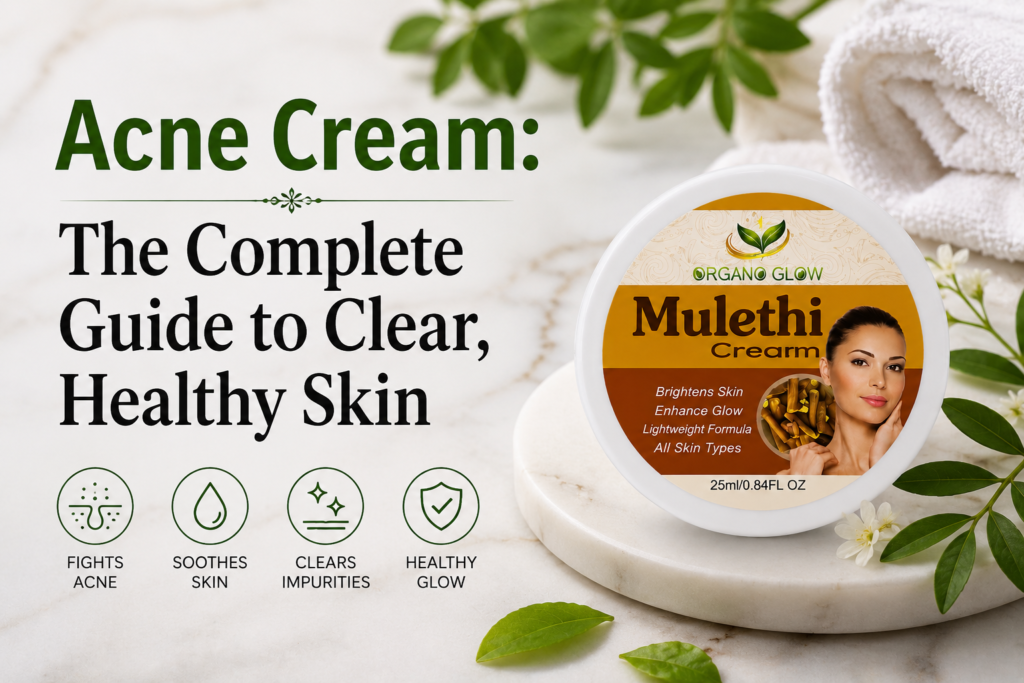
Acne Cream is one of the most common skin concerns, affecting people of nearly every age group — from teenagers going through hormonal changes to adults dealing with stress-related breakouts. While there are many ways to treat acne, topical acne creams remain one of the most trusted, accessible, and effective solutions. This guide covers everything you need to know about acne creams — how they work, the different types available, how to choose the right one, and how to use them safely for the best results.
What Is Acne Cream and Why Does It Happen?
Acne occurs when hair follicles become clogged with oil (sebum) and dead skin cells, often leading to whiteheads, blackheads, pimples, or cystic breakouts. Several factors contribute to acne, including:
- Excess oil production
- Clogged pores
- Bacterial growth (particularly Cutibacterium acnes)
- Hormonal fluctuations
- Diet and lifestyle habits
- Stress
- Genetics
Understanding the root cause of your acne helps in selecting the most effective cream and treatment approach.
How Does Acne Cream Work?
Acne creams are formulated to target one or more of the underlying causes of breakouts. Depending on their active ingredients, they may:
- Reduce excess oil production
- Unclog pores by promoting skin cell turnover
- Kill acne-causing bacteria
- Reduce inflammation and redness
- Prevent future breakouts
- Fade post-acne marks and scars over time
Common Active Ingredients in Acne Cream
1. Benzoyl Peroxide
One of the most widely used acne-fighting ingredients, benzoyl peroxide kills acne-causing bacteria and helps clear clogged pores. It’s especially effective for inflammatory acne like pimples and pustules.
2. Salicylic Acid
A beta-hydroxy acid (BHA) that penetrates pores to dissolve excess oil and dead skin cells. It’s ideal for blackheads, whiteheads, and preventing new breakouts.
3. Retinoids (Adapalene, Tretinoin)
Retinoids speed up skin cell turnover, prevent clogged pores, and are highly effective for both active acne and post-acne marks. They may cause initial dryness or peeling, so they’re usually introduced gradually.
4. Niacinamide
Known for its anti-inflammatory and oil-controlling properties, niacinamide is gentle enough for sensitive skin while still being effective against breakouts and redness.
5. Azelaic Acid
This ingredient reduces inflammation, kills bacteria, and helps fade dark spots — making it a great option for acne-prone skin with pigmentation concerns.
6. Sulfur
An older but effective ingredient that absorbs excess oil and has antibacterial properties, often used in spot treatments.
Choosing the Right Acne Cream for Your Skin Type
| Skin Type | Recommended Approach |
|---|---|
| Oily Skin | Look for salicylic acid or benzoyl peroxide-based creams that control oil |
| Dry Skin | Choose gentler formulas with niacinamide or azelaic acid to avoid over-drying |
| Sensitive Skin | Opt for fragrance-free, low-concentration formulas; patch test first |
| Combination Skin | A balanced formula with niacinamide or a mild retinoid works well |
How to Use Acne Cream Effectively
- Cleanse first – Always apply acne cream on clean, dry skin to maximize absorption.
- Use a pea-sized amount – More product doesn’t mean faster results; it can increase irritation.
- Apply as directed – Some creams are meant for spot treatment, others for the whole face.
- Start slow – Especially with retinoids or benzoyl peroxide, begin with alternate-day use to build tolerance.
- Always moisturize – Acne treatments can dry out the skin, so follow up with a lightweight, non-comedogenic moisturizer.
- Never skip sunscreen – Many acne ingredients increase sun sensitivity, making daily SPF essential.
- Be consistent – Visible results typically take 4–8 weeks of regular use.
Common Mistakes to Avoid
- Overusing the product in hopes of faster results, which often leads to irritation
- Mixing too many active ingredients at once (e.g., retinoids with benzoyl peroxide) without guidance
- Skipping moisturizer, thinking it will cause more breakouts
- Picking or popping pimples, which can worsen inflammation and scarring
- Expecting overnight results — acne creams work gradually, not instantly
When to See a Dermatologist
While over-the-counter acne creams work well for mild to moderate acne, you should consult a dermatologist if:
- Acne is severe, cystic, or painful
- Over-the-counter treatments show no improvement after 2–3 months
- Acne is leaving significant scarring
- Breakouts are accompanied by other symptoms like excessive hair growth or irregular periods (which may indicate a hormonal cause)
Final Thoughts
Acne cream can be a highly effective part of your skincare routine when matched to your skin type and used consistently. Understanding the ingredients, being patient with results, and maintaining a simple, gentle routine are the keys to achieving clearer, healthier skin over time. Combined with good skincare habits — like proper cleansing, hydration, and sun protection — the right acne cream can make a real difference in your skin’s health and appearance.
Disclaimer: This article is for informational purposes only and is not a substitute for professional medical or dermatological advice. Consult a qualified dermatologist before starting any new skincare treatment, especially if you have persistent or severe acne.