
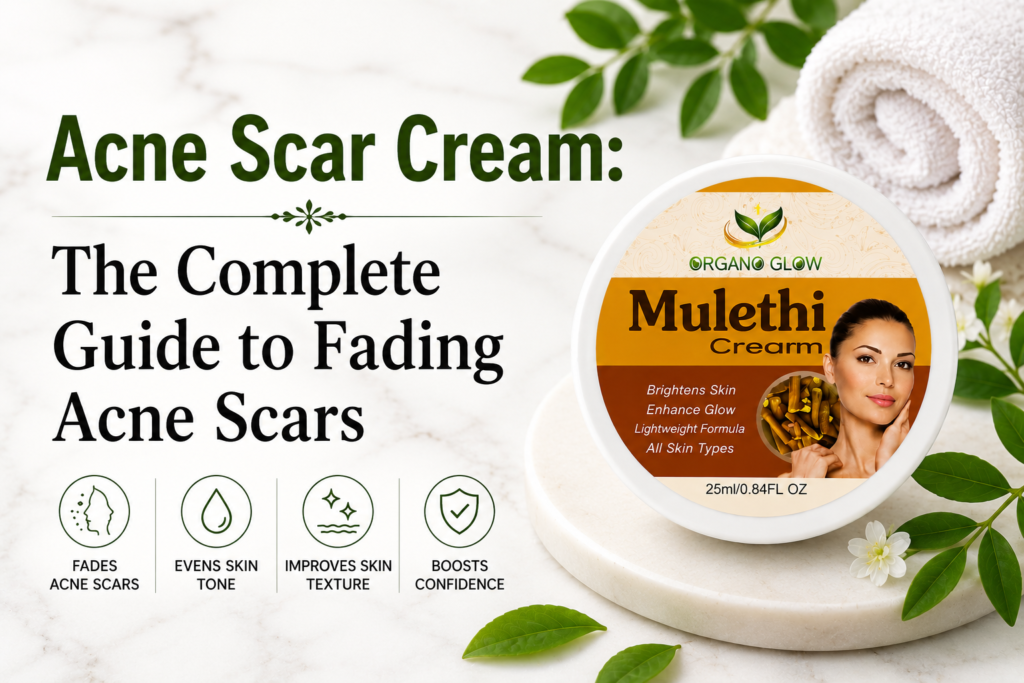
Acne Scar Cream: The Complete Guide to Fading Acne Scars
Acne scars can linger long after breakouts have healed, affecting skin texture, tone, and confidence. While acne scars can’t always be completely erased, the right acne scar cream can significantly fade discoloration, smooth texture, and improve the overall appearance of your skin. This guide covers everything you need to know about Acne Scar Cream — types of scars, effective ingredients, how to choose the right product, and tips for faster fading.
Understanding Acne Scar Cream
Not all acne marks are the same, and knowing what type you have helps you choose the most effective treatment.
1. Post-Inflammatory Hyperpigmentation (PIH)
Flat, dark or red-brown marks left behind after a pimple heals. These are not true scars but discoloration, and they usually fade with time and the right products.
2. Post-Inflammatory Erythema (PIE)
Red or pink flat marks caused by damaged blood vessels after inflammation. Common in lighter skin tones.
3. Atrophic (Depressed) Scars
Indented scars caused by loss of collagen, including:
- Ice pick scars – narrow, deep pits
- Boxcar scars – wider, box-like depressions
- Rolling scars – shallow, wave-like indentations
4. Hypertrophic or Keloid Scars
Raised, thick scars caused by excess collagen production during healing.
Topical creams work best on discoloration (PIH/PIE) and mild texture irregularities. Deep atrophic or raised scars often need additional treatments like microneedling, lasers, or dermatologist-guided procedures alongside creams.
Key Ingredients to Look for in Acne Scar Cream
1. Niacinamide
Helps fade dark spots, reduces inflammation, and strengthens the skin barrier — a gentle yet effective option for most skin types.
2. Vitamin C
A powerful antioxidant that brightens skin, fades hyperpigmentation, and boosts collagen production for smoother texture over time.
3. Retinoids (Retinol, Tretinoin, Adapalene)
Speed up cell turnover and stimulate collagen production, helping to fade discoloration and gradually smooth out mild texture irregularities.
4. Alpha Hydroxy Acids (AHAs) – Glycolic & Lactic Acid
Exfoliate the surface layer of skin, fading discoloration and improving overall texture and tone with regular use.
5. Azelaic Acid
Reduces inflammation and pigmentation while being gentle enough for sensitive, acne-prone skin.
6. Kojic Acid & Alpha Arbutin
Skin-brightening agents that specifically target dark spots and uneven tone caused by past breakouts.
7. Centella Asiatica (Cica)
Soothes skin, supports healing, and promotes collagen repair — often found in products for sensitive or irritated post-acne skin.
Choosing the Right Acne Scar Cream for Your Skin
| Scar Type | Recommended Ingredients |
|---|---|
| Dark spots (PIH) | Niacinamide, Vitamin C, Azelaic Acid, Alpha Arbutin |
| Red marks (PIE) | Niacinamide, Centella Asiatica, Azelaic Acid |
| Mild texture/rolling scars | Retinoids, Glycolic Acid |
| Sensitive skin | Niacinamide, Azelaic Acid, Centella Asiatica |
| Deep, indented scars | Retinoids + professional treatments (consult a dermatologist) |
How to Use Acne Scar Cream Effectively
- Cleanse first – Apply on clean, dry skin for better absorption.
- Patch test new products – Especially retinoids, Vitamin C, or acids, to check for sensitivity.
- Introduce actives gradually – Start with alternate-day use, especially for retinoids and exfoliating acids.
- Layer correctly – Apply lighter, water-based serums before heavier creams; avoid mixing strong actives (like retinol and AHAs) in the same routine without guidance.
- Moisturize – Scar-fading ingredients can be drying, so a good moisturizer supports the skin barrier and healing process.
- Never skip sunscreen – Sun exposure worsens pigmentation and can undo progress; daily SPF is essential when treating scars.
- Be patient and consistent – Visible fading typically takes 8–12 weeks, with continued improvement over several months.
Common Mistakes That Slow Down Acne Scar Cream Fading
- Skipping sunscreen, which darkens existing marks and slows fading
- Using too many active ingredients at once, causing irritation instead of healing
- Picking at active acne, which creates new scars while old ones are still healing
- Expecting quick results — scar fading is a gradual process, not an overnight fix
- Using harsh scrubs on already sensitive, healing skin
When to Consider Professional Acne Scar Cream Treatment
Acne scar creams work well for discoloration and mild texture issues, but for deeper or more stubborn scars, consider consulting a dermatologist for:
- Microneedling
- Chemical peels
- Laser resurfacing
- Dermal fillers (for deep atrophic scars)
A dermatologist can also recommend prescription-strength creams for faster, more targeted results.
Final Thoughts
Fading acne scars takes time, consistency, and the right combination of ingredients suited to your scar type and skin. Niacinamide, Vitamin C, retinoids, and azelaic acid are among the most effective options for improving discoloration and texture. Paired with daily sunscreen and a gentle, consistent routine, the right acne scar cream can make a real difference in restoring smoother, more even-toned skin over time.